

© 2026 Cottonwood Sporting Club. Handcrafted by 
© 2026 Cottonwood Sporting Club. Handcrafted by
After a successful career at Mossy Oak, Blake Hamilton created a consulting firm and later an investment and development firm called Nature’s Eye. www.natureseye.com
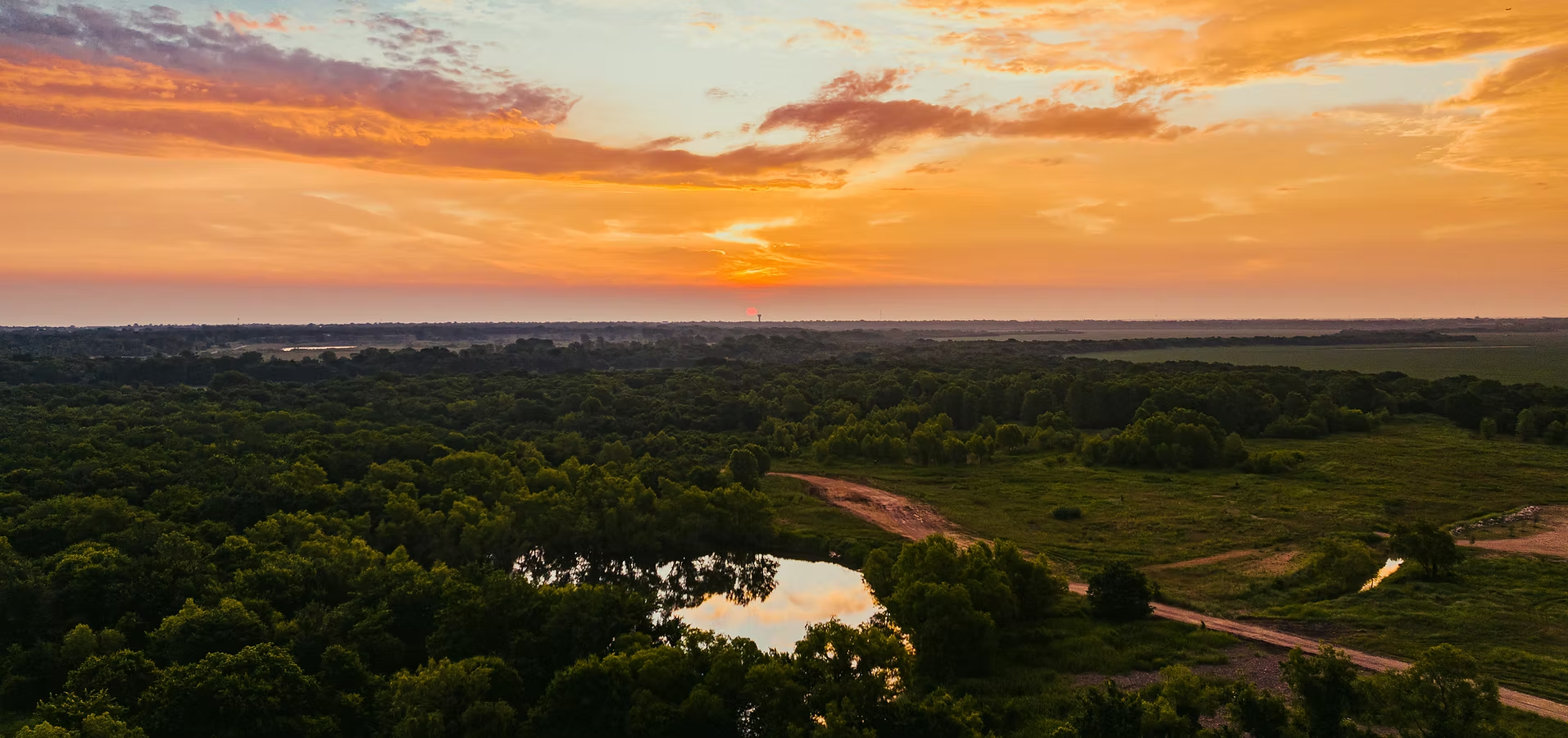
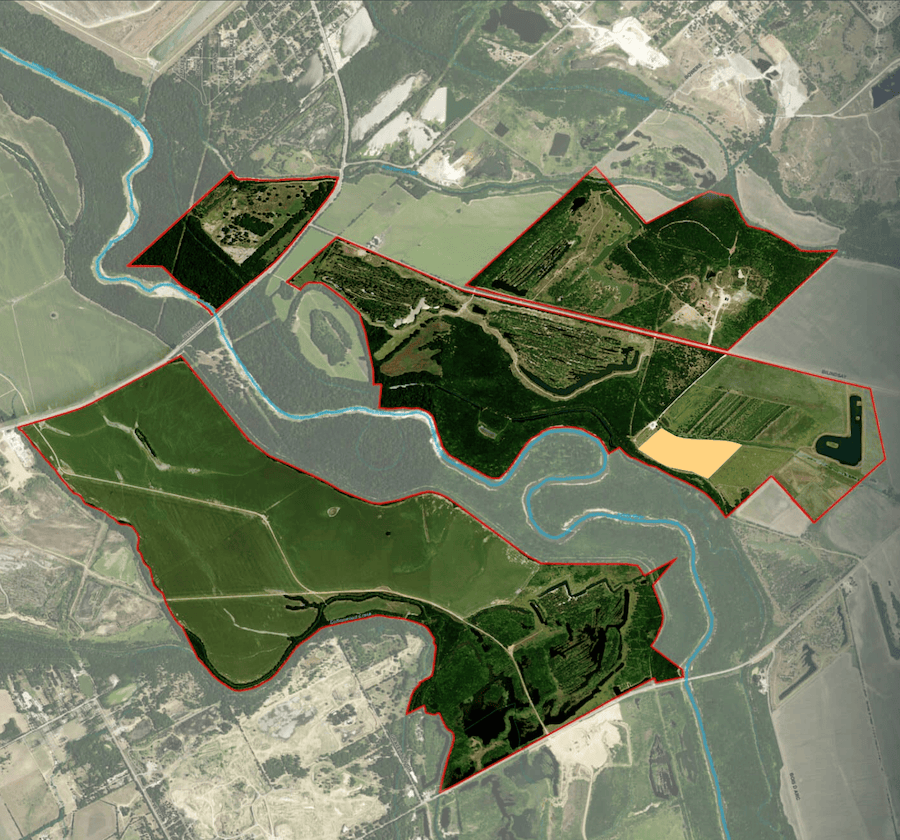
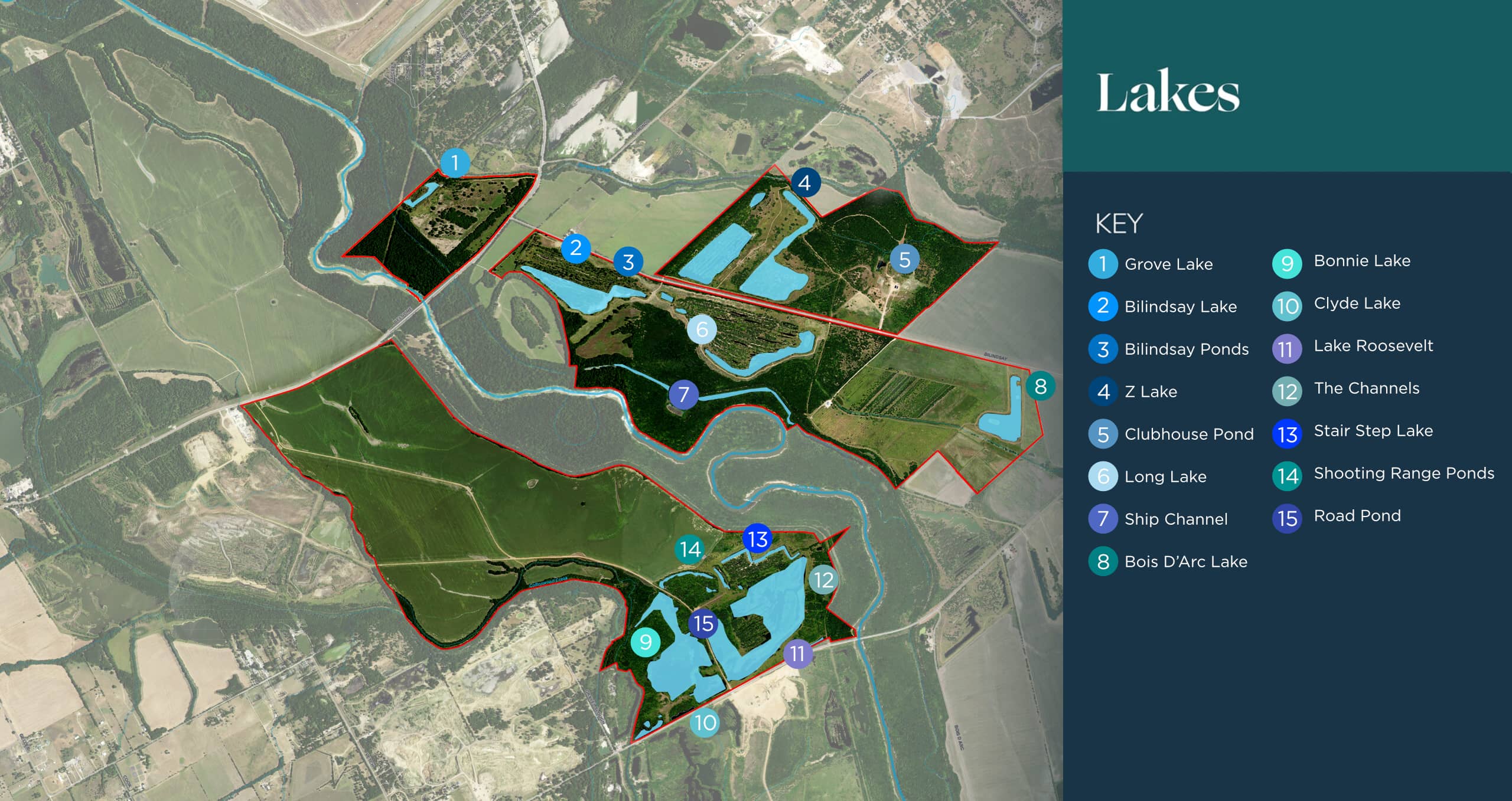
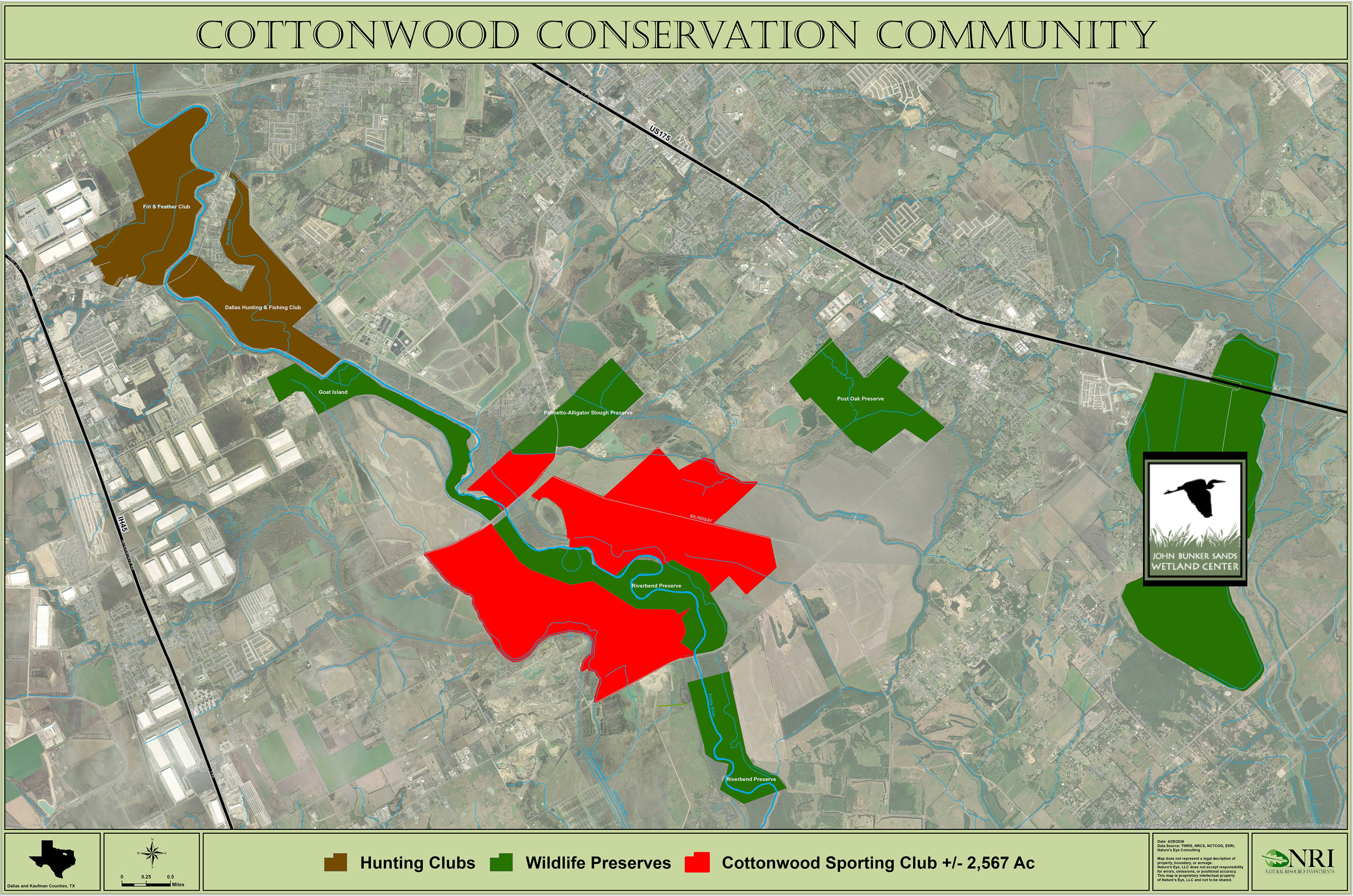
Nature’s Eye has successfully improved and developed several properties into outdoor recreation and sportsmen’s destinations. Starting in 2021, Nature’s Eye began assembling properties along the Trinity River in Dallas County and improving them to create Cottonwood.
The attached videos give you a glimpse of that vision and experience.
In 2024, a partnership was created with five other like-minded sportsmen/conservationists, and properties were combined with adjoining land to create Cottonwood Sporting Club, LLC. Cottonwood Sporting Club is extremely blessed to work with Blake Hamilton and Nature’s Eye to bring this new club to its full potential.
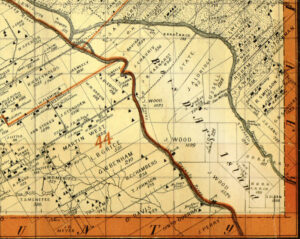 This is an epic to the historic, and still fresh in the minds of people, the mystic and fearsome Bois d’Arc Island — a strip of land in the southern part of Dallas County, a couple of miles wide, and eight or ten miles long. Its area, up to recent years, was estimated all the way from ten to twenty times its actual size, because of the density of its timber and foliage, the game which abounded there, and the easiness of getting totally and irretrievably lost on cloudy days, or at night.
The writer was “born and brung up” within hailing distance of this noted game preserve, and while he never killed any bear, panthers, or deer on the Island, he was just the right age to absorb all the hunting stories and retain them in memory’s casket at the time Bois d’Arc Island was at its height of glory. Later on, he traversed its wilderness-like jungles and learned for himself many things, which will, later on, be related.
In 1879, Bois d’Arc Island was practically unknown, except to a few pioneer settlers who had traversed its edges, and decided it was not habitable. The panthers yelled, bears growled, and all kinds of wild animals made a protesting noise against its invasion by Man.
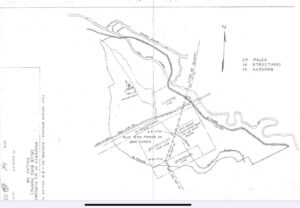
This island was formed by a change in the river’s course. In early days, the Trinity’s course was what is now known as Parsons Slough. Later, the waters cut a channel west of the old river bed, and made what has, for the last seventy-five or more years, been known as Bois d’Arc Island.
A fiction writer could take the actual facts connected with this island and make a story that would cause the reader’s hair to stand on end, but this chronicler is merely a prosaic writer of facts, and can only, in a feeble way, say of the place, what should be written and published about it.
His earliest actual knowledge was gathered in 1880, when the old Texas Trunk Railroad was being built just on its northern border. Though, previous to that time, he had been once or twice to help hunt cows on the margins of the Island, and had seen deer in herds of the size one sees chicks following Rhode Island Red hens around Garland these days.
One of his earliest hunting experiences was a trip to the Island to hunt wild turkeys. The party went over early in the afternoon and camped near a big roost. Just before day, next morning, the gobble-gobble and the put-put of numerous turkeys could be heard, seemingly, all around the camp, and thinking all that was necessary to secure a good turkey dinner, was to walk boldly out and shoot one, this inexperienced nimrod sallied forth through he brush, making as much racket as a horse-power thresher-and never got in sight of a turkey. Some of the older hunters gave him some fatherly advice, which is not forgotten, even unto this day.
On another occasion, while hunting squirrels on the Island, a deer jumped up just in front of him, and there is where he got his first introduction to buck ague. When the deer was about 100 yards off, he remembered his gun-an old-fashioned muzzle loader loaded with squirrel shot-and turned both barrels loose. Some of the shot must have taken effect, because no kind of racket could have made a deer run so fast, as that one did.
Old Uncle Jack Ballard, who owned a lot of land, and lived near the lower end of the Island, kept a big pack of bear dogs, and used to have great times chasing bruin. He frequently killed a bear, and had lots of fun chasing them. He raised a large herd of horses, which grew up practically wild, and after he died, and his estate was being settled up, many of these animals were killed getting them out to the prairies.
Parsons Slough was one of the finest fishing streams in Texas, probably, for many years. There were long, deep holes with gravel bottoms and crystal-clear water, and fish abounded there, until practically exterminated by dynamiters and netters. People went there to fish from all over Dallas, Collin, Rockwall, Kaufman, Ellis, and other counties, and for years, it was the hunter’s and fisherman’s paradise. Many lakes were about the lower end of the Island, and fish were caught there by the wagon load, and left to spoil on the banks through pure wantonness.
And, the fish fries they used to have! We have seen five hundred people at these affairs, and more fish cooked than four times that number could eat. Ten-, fifteen-, and twenty-pound catfish and drum, sliced up like ham, and fried to a crisp brown and piled in dishpans, where one waded in and ate, till eating was a burden. The men did the catching and dressing, and the women looked after the cooking.
In the early days, nearly every family kept a pack of hounds, and it was almost a nightly occasion to hear the dogs trailing. On clear, still nights, they could be heard for miles, and the prettiest music ever listened to, is a chorus of long-eared hounds on a hot trail, with all parts carried. Many of these dogs have been known to follow a trail for two days, after which, they would be in the repair shop for several days. Nothing would cause a fight quicker, than to abuse one of these dogs, or try to steal him. Horse and cattle stealing could be overlooked, but the man who stole a hound, carried his life in his hands.
On occasion, dogs ran a deer across the prairie, from East Fork to the Island, and the fagged animal came right through the old Farmer’s School House yard. Uncle Lige Spillman was teaching, and he was a disciplinarian unquestioningly obeyed, but on this occasion, every pupil made a break for the doors, windows, or any way to get out and give chase. The deer appeared to be run down, and the boys thought they could catch him, but after running half a mile, they decided that he still had too much speed, and gave up the case. The dogs were about an hour behind, but were persistently holding to the trail. They had been running the deer, according to their owners, for over 18 hours, but we never learned if they caught him.
The meat problem in those days was a simple one. Mash was fine on the Island, and hogs were turned loose there to hustle for themselves. A few weeks before killing time, some owners would feed the hogs a little corn to make them gentle, but many merely went to the Island and killed and dressed what they wanted. A “claim” was established by turning one or more hogs loose, and it was related of one man, that he lived off the meat killed and sold from his claim, after turning loose only one male pig there.
But, now all this is changed. Where once blinds were constructed around salt licks and deer were killed at will, where the aristocratic black bear roamed at will, where wild turkeys and bee trees abounded, and the scream of the panther was not uncommon — is now a pastoral agricultural paradise. Broad fields of alfalfa, big farms of cotton, corn and grain, occupy the place once the home of more fine game than any one spot of like size in Texas. Navigation of the Trinity, with the consequent shutting out of the water from the slough, big levees, and the march of progress, have made of a game preserve, one of the finest farming sections of the state.
Perchance, ’tis better so, but some of us pine for the good old times of fewer crops and more game.
June 17, 1910, Garland News.
– o o o –
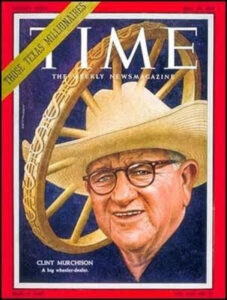 Clint Murchison, Sr was born in Tyler, Texas in 1895 and grew up in Athens, Texas. He worked at his father’s bank and served as a first lieutenant in the US Army during WWI before joining lifelong friend Sid Richardson (patriarch of the Bass family of Ft Worth) as struggling lease traders in the Burkburnett oilfields in 1919.
By making investments in a variety of industries, Murchison became one of the richest men in America, appearing on the cover of Time magazine in 1954.
Upon his death in 1969, he had an estimated net worth of more than $500 million. Throughout his life Murchison was influential with presidents, politicians, titans of industry, ranchers and other wealthy oilmen.
He was part of a group who became commonly known as “The Big Four” It included Clint Murchison, Sr., Sid Richardson, H.L. Hunt and Roy Cullum.
“If Texas had a Mount Rushmore, their four faces would adorn it. They became founders of the greatest Texas oil family fortunes…headstrong adventurous men who rose from nowhere and would take turns being known as the richest man in America”
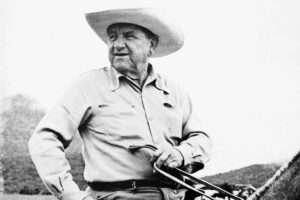
Murchison was very generous and often shared his philosophy, “Money is like manure. If you spread it around, it can do a lot of good. But if you let it pile up in one place…it just stinks.”
Murchison was most passionate about hunting and fishing. He grew up hunting and fishing at Coon Creek Club where his father was a member. He loved to entertain his friends at the numerous recreational ranches he owned in Mexico and Texas including Preston Road Farm, Matagorda Island, Isla Del Toro, Pago Pago, Tule, Acuna, Gladoaks Farm near Athens, TX and Bluebird Farm south of Dallas. Properties were selected largely based on the abundance of wildlife and ability to entertain VIP guests with a mix of business, hunting and fishing. He threw lavish parties that included wingshooting and fishing for Bream, Bass and Crappie. He famously hosted an elaborate and widely publicized hunting and fishing trip with the Duke and Duchess of Winsor. Murchison even accumulated several sporting goods companies including Field and Stream Magazine, Heddon Rod & Reel and Daisy Manufacturing Company.
In 1932 the Great Depression bankrupted farmers in the fertile Trinity River farmland of South Dallas County. Murchison saw it as an opportunity to put people to work and have a place where he could test some of the ideas teaming in his brain. He purchased the 2,615 acres in 1933 by paying the back taxes. He named it Bluebird Farm and gave strict instructions to “hire any man who needed work and pay them on the day of their work.”
He took great interest in Bluebird Farm. He described it as “a spot where he could divert his mind from nagging worries of business.” He hired a farmer friend from Athens who used 200 mules to work the land and construct the “biggest barn in the world” which was featured in the “Ripley’s Believe It or Not.” The massive barn featured feeding troughs on both sides to feed experimental combinations of unique grains which were grown at Bluebird Farm. He dreamed of Bluebird being a showplace cattle ranch and “finishing school” for the extensive cattle operations which he co-owned with Toddie Lee Wynne, Sr. at Matagorda Island. They had thousands of cattle shipped from Matagorda to Bluebird
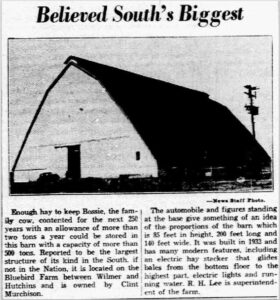
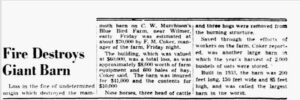
At Bluebird, Murchison set out to create a light-skinned breed of cattle ideal for the Texas climate. For many years, he experimented crossing Durham (white shorthorn) cattle and White Brahman cattle imported from South America. He introduced Karakul sheep and imported and bred Oxacan horses which were gentler than Shetland ponies. He gave one to his friend Dwight D. Eisenhower as a gift for his grandson. He even experimented with breeding a “spotted jackass” at Bluebird. He sent annual Christmas gifts such as hams and black-eyed peas from Bluebird Farm to friends all over the world.
Clint Murchison had a natural love for horses and thoroughly enjoyed horse racing. Each year, he and his brother Kenneth would take their party of racing fans in a private rail car for the famous week at Churchill Downs. In the early 1930’s, during a period when parimutuel betting was legal in Texas, they purchased 80 fine blooded horses from Bill Mayes of Keeneland Farms, Kentucky at a cost of $265,000. “Bluebird Stock Farm was quite a showplace with an oval training track for training horses. It was a Texas version of Bluegrass country.”
Parimutuel betting was outlawed in Texas in 1938, changing Murchison’s plans for a horse racing track but he later purchased Del Mar Turf Club. He enjoyed racing his “Bluebird Horses” at racetracks across the US and Mexico where they developed a quality reputation.
In 1944 Murchison and his sons moved his corporate offices to a new development named “Highland Park Village.”
By 1950, “Bluebird Farm was flourishing with Cattle and Horses and it gave Clint Murchison great pleasure.”
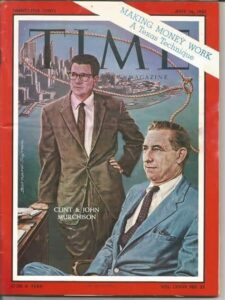
His son’s Clint, Jr and John became successful businessmen of their own and were noted for creating the Dallas Cowboys in 1960 and co-founding Preston Trail Golf Club in 1962 located on the Murchison family’s beloved Preston Road Farm.
*Source, “Clint” by Ernestine Orrick Van Buren, personal secretary for Clint Merchison,Sr 1950- until his death in 1969